Woven vs Knitted Elastic: Which One Does Your Garment Need?
By Jai Roop Textile ·
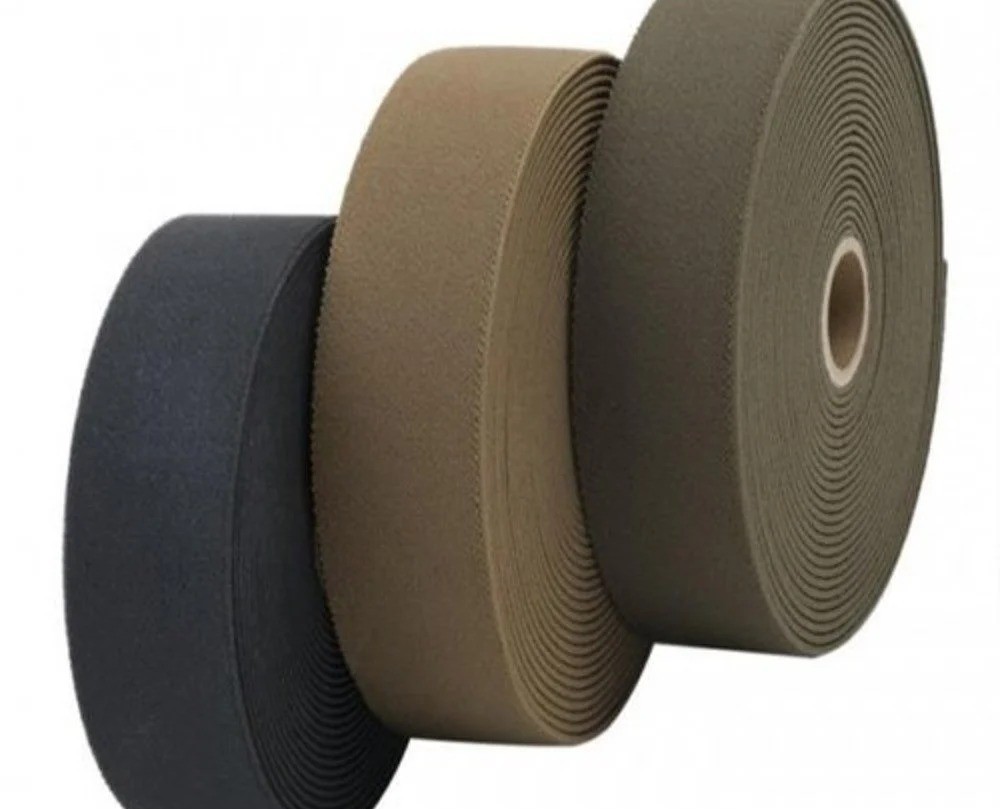
"Woven or knitted?" is the first question we ask every new buyer at Jai Roop Textile — and it is the question that decides whether a garment feels right after ten washes or loses its shape after two. Both are elastics, both stretch, but they are built differently and behave differently. This guide explains the difference in plain terms so you can specify the right one.
How each elastic is made
Woven elastic is produced on narrow-fabric looms: warp yarns interlace with weft yarns around rubber or spandex cores, the same way cloth is woven. The result is a firm, flat, dense tape with a very stable edge.
Knitted elastic is produced on warp-knitting machines: yarns are looped around the elastic cores. Looping gives a lighter, softer, more porous structure that stretches easily and springs back.
Side-by-side comparison
| Property | Woven Elastic | Knitted Elastic |
|---|---|---|
| Feel / hand | Firm, dense, flat | Soft, light, breathable |
| Stretch behaviour | Controlled stretch, stays flat when stretched | Easy stretch, may narrow slightly when stretched |
| Recovery (spring-back) | Very high, holds tension over long use | High, ideal where comfort matters more than grip |
| Edge stability | Does not roll or curl | Can curl at the edge if not finished well |
| Stitch-through / needle damage | Robust when stitched directly | Best sewn into a casing or with care |
| Typical widths at Jai Roop | 5 mm to 100 mm | Custom widths and GSM |
| Cost position | Higher (more yarn per metre) | Generally more economical |
Choose woven elastic when…
- The elastic carries load: trouser and skirt waistbands, heavy denim, uniforms, workwear.
- It will be stitched through directly and must not narrow or twist.
- You need industrial or medical braces and supports that hold firm tension for months.
- The product goes through repeated hot washing and must keep its width.
Choose knitted elastic when…
- Softness against skin is the priority: innerwear, lingerie, sleepwear, kids' wear.
- The garment is lightweight: activewear, leggings, masks, medical disposables.
- You need a lower cost per metre without giving up recovery.
- The elastic sits in a casing or fold and does not take direct stitching stress.
Three practical checks before you order
- Stretch test: stretch a 10 cm piece to its comfortable limit and release. It should return to 10 cm within a few seconds. Woven should return flatter; knitted should return softer.
- Width under tension: measure the width relaxed and at 50% stretch. For direct-stitch waistbands, the difference should be minimal — that points to woven.
- Wash sample first: always run one sample through your factory's actual wash and dry cycle before confirming bulk. We supply samples for exactly this reason.
Why many buyers use both
Most garment programmes are not "either/or". A typical brand uses woven elastic in outer waistbands and knitted elastic in innerwear and comfort areas. Because Jai Roop Textile manufactures both in Gurugram, you can source the full elastic range from one factory, with matching colours and one delivery — which simplifies your BOM and quality control.
Frequently asked questions
Is woven elastic stronger than knitted elastic?
Woven elastic is denser and holds tension better under heavy or long-term load, which is why it is preferred for trouser waistbands and supports. Knitted elastic is not weak — it is lighter and softer, and the better choice where comfort matters more than grip.
Which elastic is better for innerwear?
Knitted elastic is usually preferred for innerwear and lingerie because it is soft, light and breathable against the skin. For waistbands on heavier garments, woven elastic holds shape better.
Can knitted elastic be stitched through directly?
It can, but it may narrow slightly when stretched and the edge can curl if the finish is poor. If the elastic will be stitched through under tension, woven elastic is the safer specification.
What widths of woven elastic does Jai Roop Textile make?
Woven elastic is available in custom widths from 5 mm to 100 mm. Knitted elastic is made to custom widths and GSM as well; share your requirement for a quote.
Need Woven Elastic in bulk?
Custom widths, colours and designs for garment exporters, brands and wholesalers. Share your requirement and we will get back with a quote.